





What to See in Caltagirone in One Day: the Capital of Ceramics
Some towns you visit; others you read. Caltagirone belongs to the second kind: every staircase, every facade, every railing tells the same story, that of an art handed down here for centuries. A single day is enough to fall for it, if you know where to look. This is a practical guide to catching the essentials, among maiolica (majolica), Baroque architecture and artisan workshops.
Why Caltagirone is the Capital of Ceramics
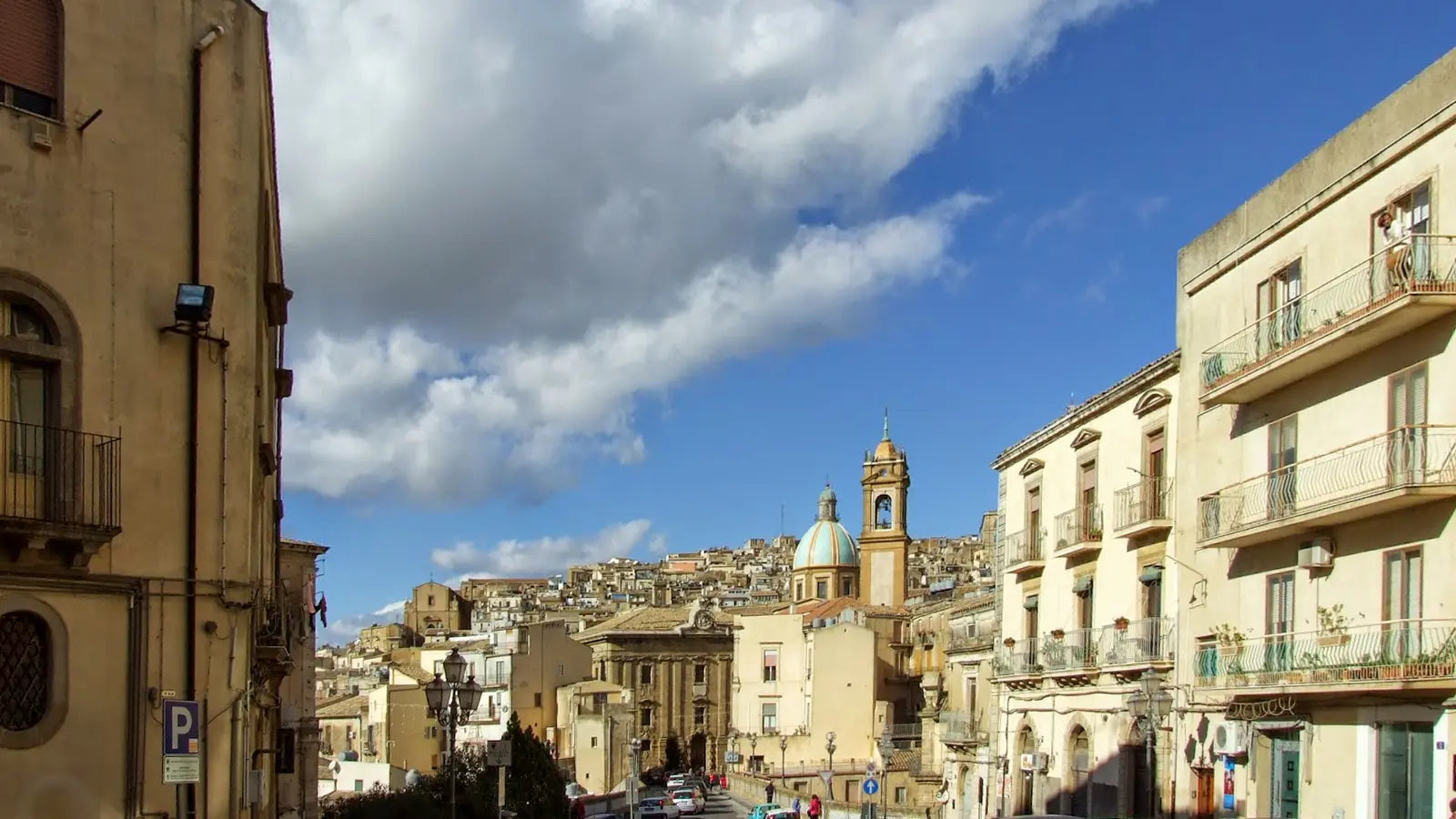
Caltagirone sits inland in south-eastern Sicily, in the province of Catania, perched across three hills. Its name comes from the Arabic Qal'at al-Ghiran, the "fortress of vases": a clue that says it all. Here ceramics are not a souvenir for tourists, they are the very soul of the town, nurtured by a land rich in clay and by glazing techniques introduced by the Arabs in the 9th century.
Since 2002 Caltagirone has been part of the UNESCO site of the Late Baroque Towns of the Val di Noto, rebuilt after the earthquake of 1693 in a scenic, theatrical style. The result is a historic centre where Sicilian Baroque and maiolica meet at every turn.
Read more → Sicily to Experience: a Journey Through Places, Culture and Ceramics
The Scala di Santa Maria del Monte
If you are short on time, start here. The Scala di Santa Maria del Monte (Staircase of Santa Maria del Monte) is the symbol of the town: 142 steps linking the lower part to the upper one, over more than one hundred and thirty metres of climb. It began in 1606 as a series of separate ramps; they were unified into today's single staircase only in 1844.
Its fame, however, arrived in 1954, when the risers of the steps were faced with polychrome ceramic tiles. The decorations, gathered and adapted by Antonino Ragona, trace ten centuries of Sicilian maiolica: you climb through Arab-Norman motifs, then Aragonese and Baroque ones, up to the contemporary designs at the top. Take your time to climb it slowly and to turn around and admire the view.
Read also → Caltagirone: a Treasure in the Heart of Sicily

The Duomo di San Giuliano and the Churches
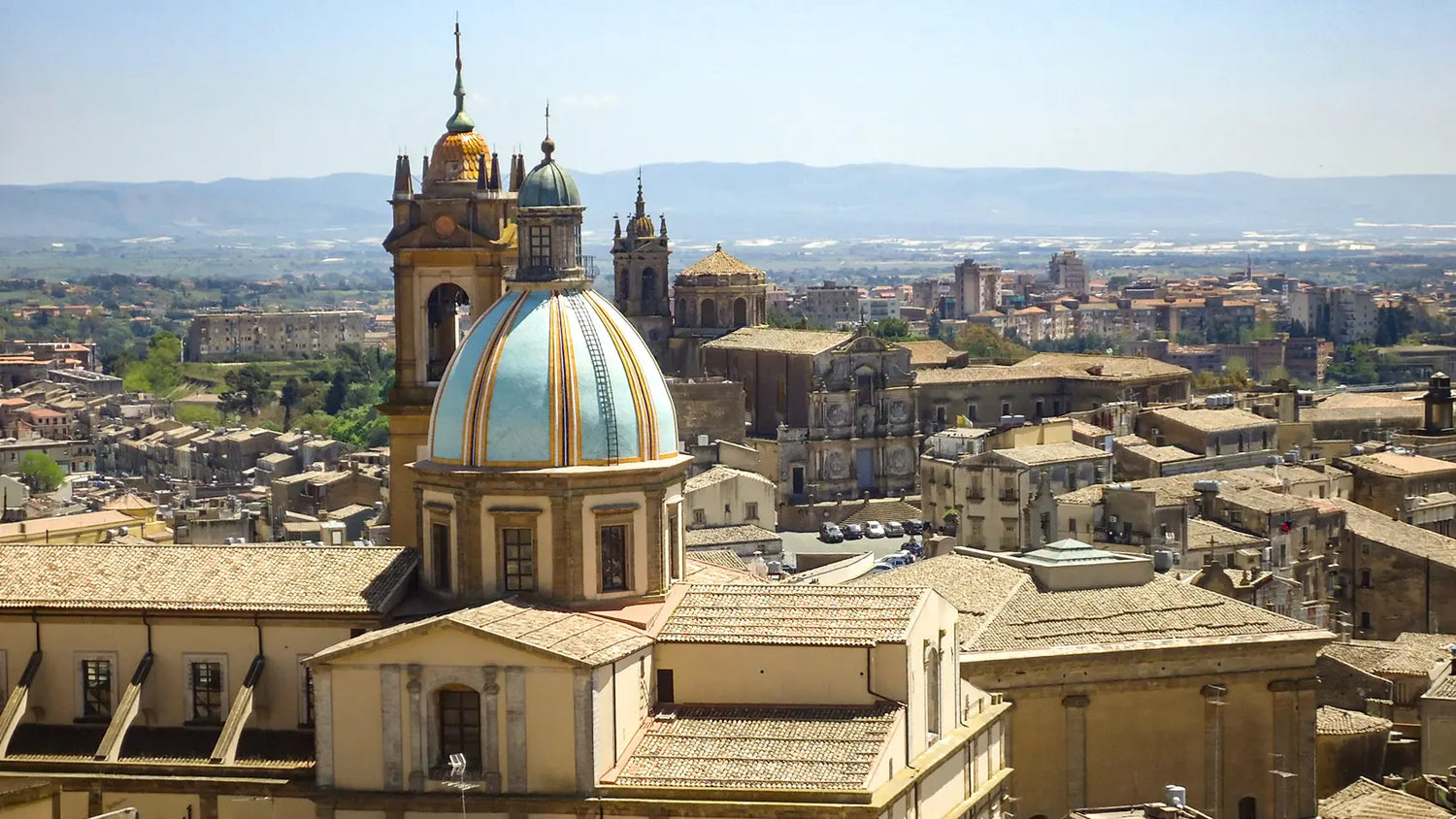
At the top of and around the staircase lies the religious heart of the town. The Duomo di San Giuliano (Cathedral of San Giuliano) has Norman origins, but the earthquakes of 1542 and 1693 forced its reconstruction more than once: today it features a bell tower nearly fifty metres high and a dome faced with local ceramics, as tradition demands.
Not far away, the Church of San Francesco d'Assisi and the Church of the Gesu hold works of art and bear witness to the town's Baroque richness. You do not need to visit them all: one or two are enough to catch the atmosphere.
The Regional Ceramics Museum
To truly understand Caltagirone, one stop is a must: the Museo Regionale della Ceramica (Regional Ceramics Museum), the most important in Italy devoted to this art after the one in Faenza. It holds around 2,500 pieces that tell the story of Sicilian ceramic production from prehistory to the present day, including the famous quartare (traditional jugs) and the nativity-scene figures. It is the best way to train your eye before visiting the workshops: afterwards, you will know how to recognise quality.
The nativity scenes themselves deserve a separate mention. Caltagirone is one of Italy's capitals of the handmade nativity scene, and the tradition of pastori (nativity figures) in terracotta and hand-painted ceramic has been alive for centuries. If you visit the town around Christmas, you will find nativity displays and exhibitions in the churches and workshops: one more reason to choose the holiday season.

The Villa Comunale and the Ponte San Francesco
A short walk from the centre, the Villa Comunale (municipal public garden), designed in the 19th century, is a quiet break among panoramic terraces, statues and ceramic decorations, including a distinctive bandstand. It is the right place to rest your legs after the staircase.
Along the way, do not miss the Ponte San Francesco (San Francesco Bridge), entirely decorated with colourful maiolica that depict scenes of local life and history: it is one of the most photographed views in Caltagirone, especially at sunset.
The Artisan Workshops: Where to See (and Buy) Ceramics
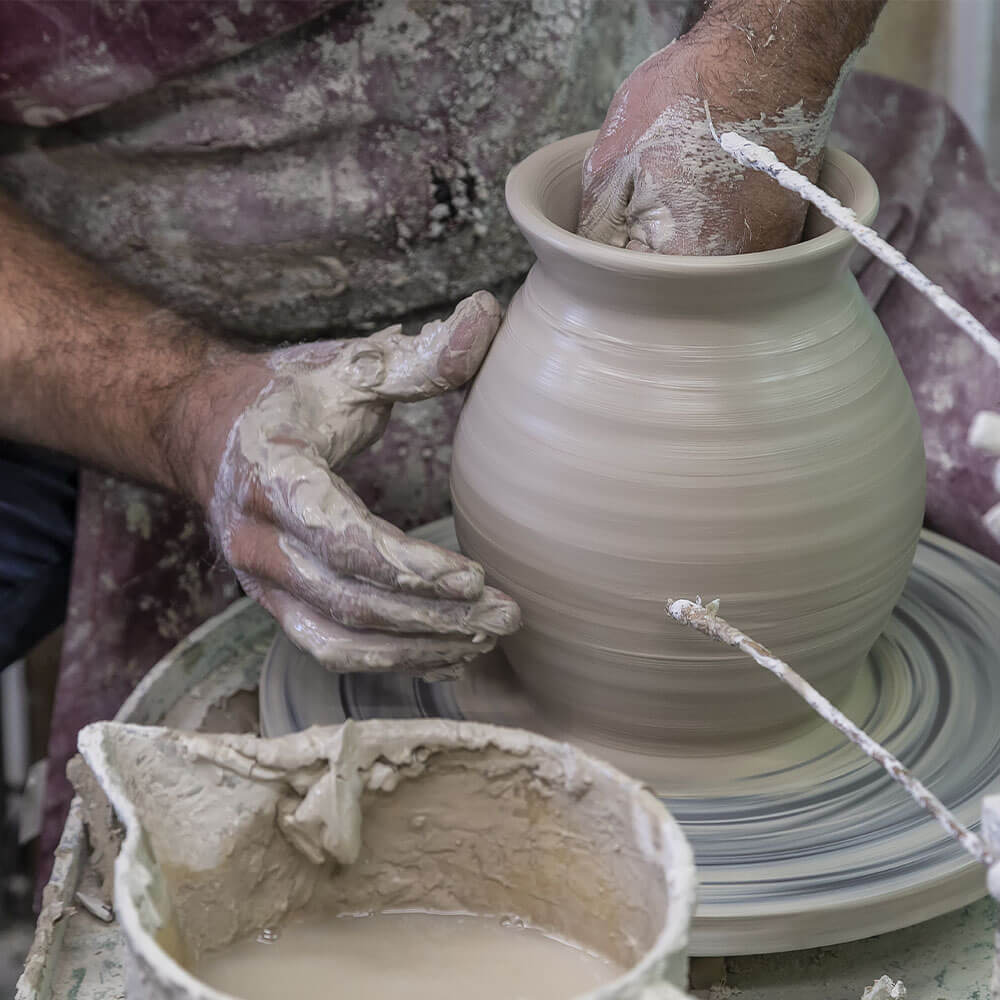
You also visit Caltagirone with your eyes on the shop windows. Artisan workshops dot the historic centre, above all along the climb towards the staircase and in the neighbouring streets. Here you can watch the masters at work, observe the hand-painted decorations and discover the differences between the various styles.
A practical tip: tell genuine artisan ceramics apart from imported industrial products. Authentic maiolica is hand-painted, and the small irregularities of the brushstroke are its signature, not a flaw.
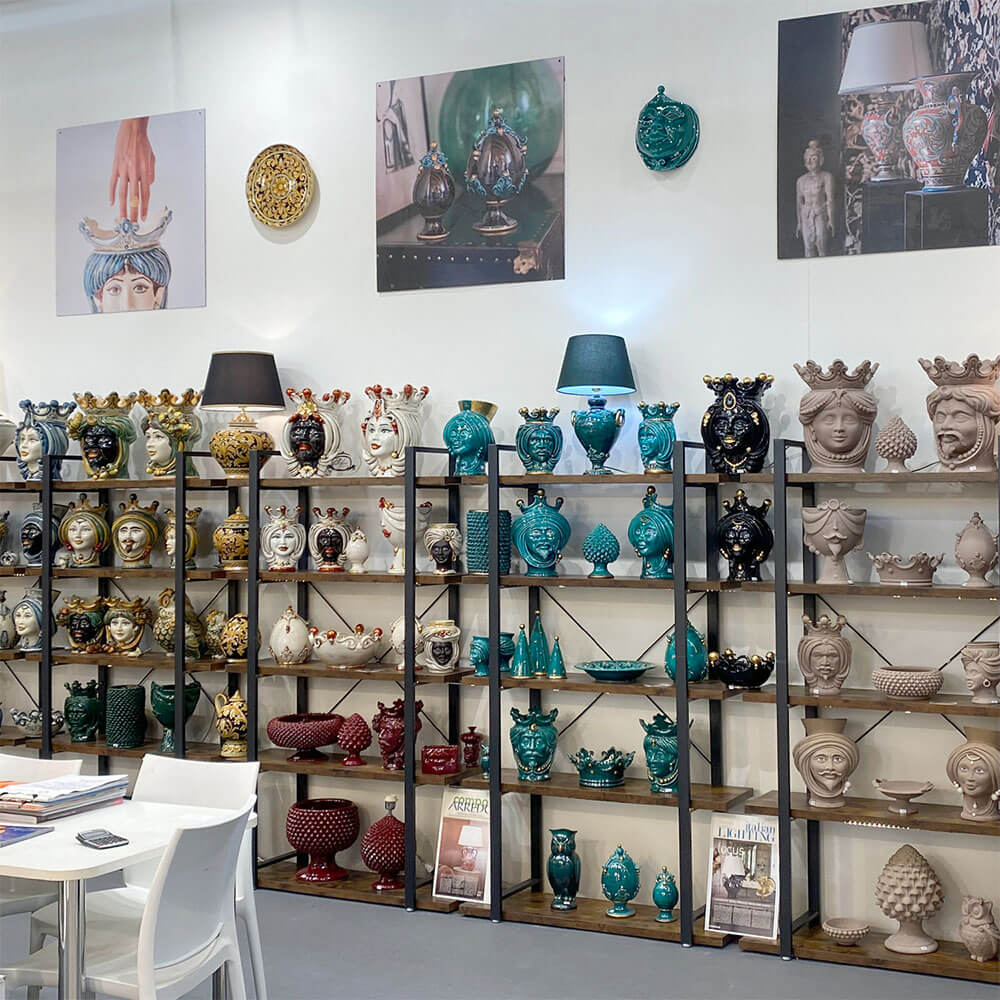
If you want to see the work live, stop by our workshop, where the ceramics take shape, and our showroom, where the collections are displayed: two places to get to know up close the people who make Caltagirone ceramics.
Guide → How to Recognise Genuine Caltagirone Ceramics · What to Take Home → Authentic Sicilian Souvenirs
When to Go: the Scala Infiorata and the Luminaria di San Giacomo
Caltagirone is beautiful all year round, but two events transform it.
In May, with the Scala Infiorata (the Flowered Staircase), the 142 steps become a single great picture made of thousands of pots of flowers, arranged to form a design.
On 24 and 25 July, for the feast of the patron saint San Giacomo, the Luminaria (the Illumination of San Giacomo) takes the stage: thousands of small lamps (the coppi) are lit along the whole staircase to compose luminous images. It is the most stirring spectacle of the year.
The Christmas season is worth it too: Caltagirone is the town of nativity scenes, and the shop windows and churches fill with ceramic figures.
Coming soon: "Sant'Agata and the Great Feasts of the Sicilian Calendar"
How to Get There and Practical Information
Caltagirone is easily reached by car: about an hour from Catania and its airport, a little more from Ragusa or from Piazza Armerina (with the nearby Villa Romana del Casale, another UNESCO stop). There is also a rail connection, but the car remains the most flexible way to explore the interior.
The historic centre is walked on foot, but factor in the climbs: comfortable shoes are a must. For a full, unhurried tour, four or five hours are enough, lunch included.
Where to Take a Break and What to Taste
A day in Caltagirone is also a chance for good food. The local cuisine is the Sicilian cooking of the interior, generous and hearty: fresh pasta, vegetables, meats, and of course the sweets. Around here no one gives up a cannolo or a slice of cassata, and in the right season the almond pastries. Between one climb and the next, a stop at a pastry shop or a trattoria in the centre is part of the experience, not a waste of time. Many venues face right onto the ceramics streets, so you can keep looking at the shop windows while you rest.
In the Surroundings: What to See Near Caltagirone
If you have more than a day, Caltagirone is an excellent base for the Sicilian interior. In less than an hour you reach Piazza Armerina, with the extraordinary Villa Romana del Casale and its mosaics, also a UNESCO site. A little further on lie the towns of the Val di Noto (Noto, Modica, Ragusa Ibla), capitals of Sicilian Baroque. And if urban planning intrigues you, nearby Grammichele is worth a stop, with its rare hexagonal layout. These are stops that round out a journey into the most authentic heart of Sicily.
Coming soon: "The Baroque of the Val di Noto: Noto, Modica, Ragusa Ibla"
A One-Day Itinerary
If you want a ready-made route: start from the Ponte San Francesco, climb towards the Duomo di San Giuliano, tackle the Scala di Santa Maria del Monte all the way to the top, come down slowly among the artisan workshops, devote an hour to the Regional Ceramics Museum and finish with a break at the Villa Comunale. A full day, but enough to take home the spirit of this town.
Take Home a Piece of Caltagirone
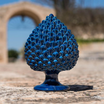
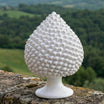
Cannot make it, or want to rediscover the emotion of the town back home? The works of Ceramiche di Caltagirone Sofia are born right here, hand-modelled and hand-painted, and are shipped throughout Italy and all over the world with insured delivery. Explore the collections → · Discover how we work →

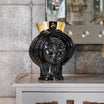
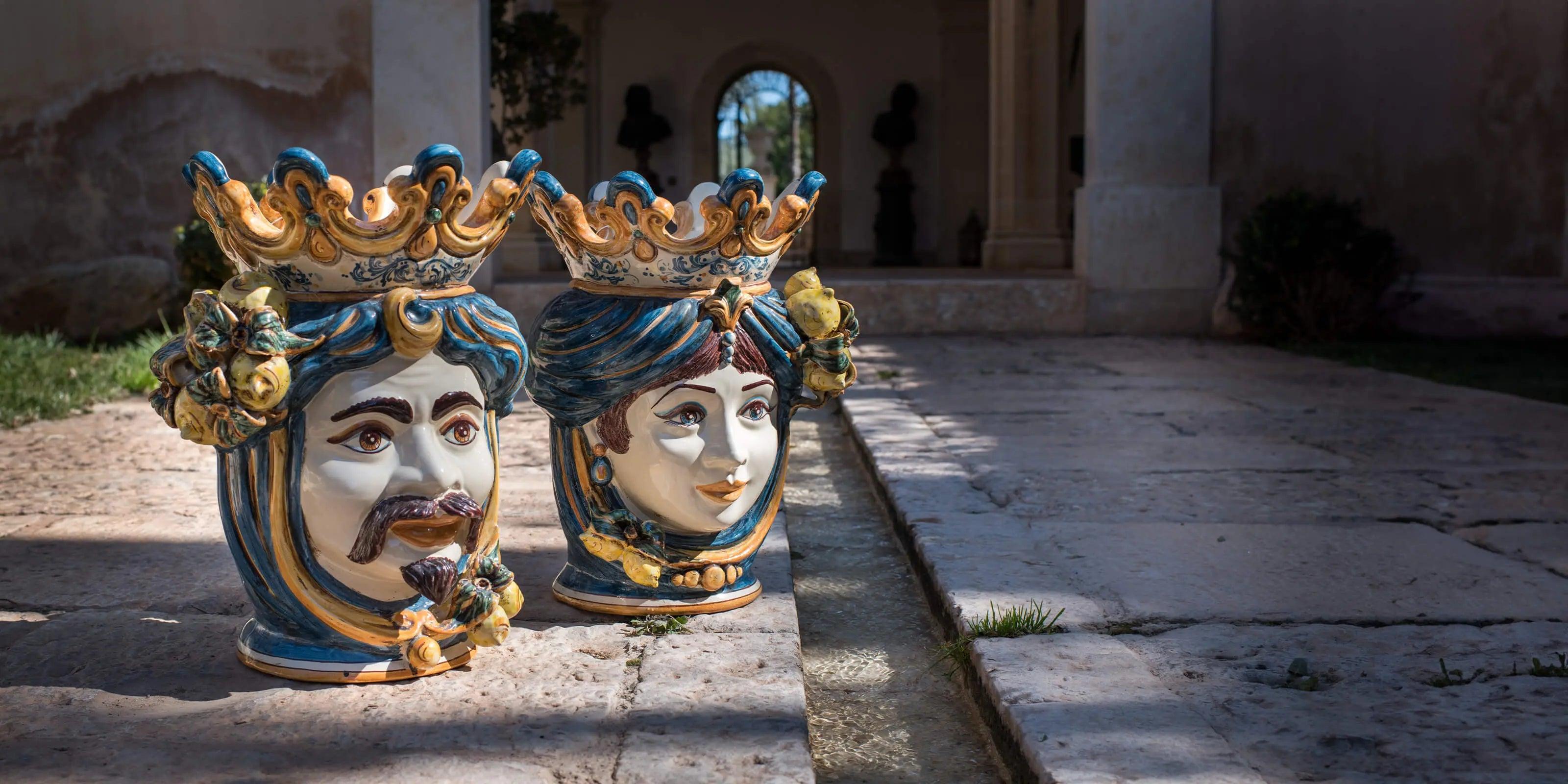
Sicilian Moor's Head H 38 cm / 15", Moro Male, Decoro Sicily – Testa di Moro from Caltagirone, Sicily
Acquista ora
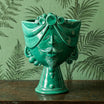
Sicilian Moor's Head H 38 cm / 15", Woman, Decoro Sicily – Testa di Moro from Caltagirone, Sicily
Acquista ora
Sicilian Head Vase with Lemons H 40 cm / 15.7", Woman, Mono Blue – Testa di Moro from Caltagirone, Sicily
Acquista ora
Moor's Head Vase with Lemons H 40 cm / 15.7", White Man, Green and Orange – Testa di Moro from Caltagirone, Sicily
Acquista oraFrequently Asked Questions
How much time do you need to visit Caltagirone? A day is enough to see the essentials: the Scala di Santa Maria del Monte, the Duomo, the Regional Ceramics Museum, the Villa Comunale and the artisan workshops. Taken at an easy pace, four or five hours will do.
What not to miss in Caltagirone? The Scala di Santa Maria del Monte with its 142 maiolica steps, the Regional Ceramics Museum (the most important in Italy after Faenza) and a walk among the artisan workshops.
When is the best time to visit Caltagirone? Spring and autumn for the weather. But to experience the town at its best, aim for May (Scala Infiorata), 24 to 25 July (Luminaria di San Giacomo) or the Christmas season of the nativity scenes.
How do you get to Caltagirone? By car, in about an hour from Catania and its airport. It is also within easy reach of Piazza Armerina and the Val di Noto.


Comment
Note: comments must be approved before being published.
This site is protected by hCaptcha and the hCaptcha Privacy Policy and Terms of Service apply.